henaff-lab
  • Projects
  • Topics
  • People
  • What's Happening
  • Teaching
Logo

IDM | NYU TANDON SCHOOL OF ENGINEERING 370 Jay street, 3rd Floor Brooklyn, NY 11201

Instagram

Theater for Collaborative Survival | Detroit Science Gallery

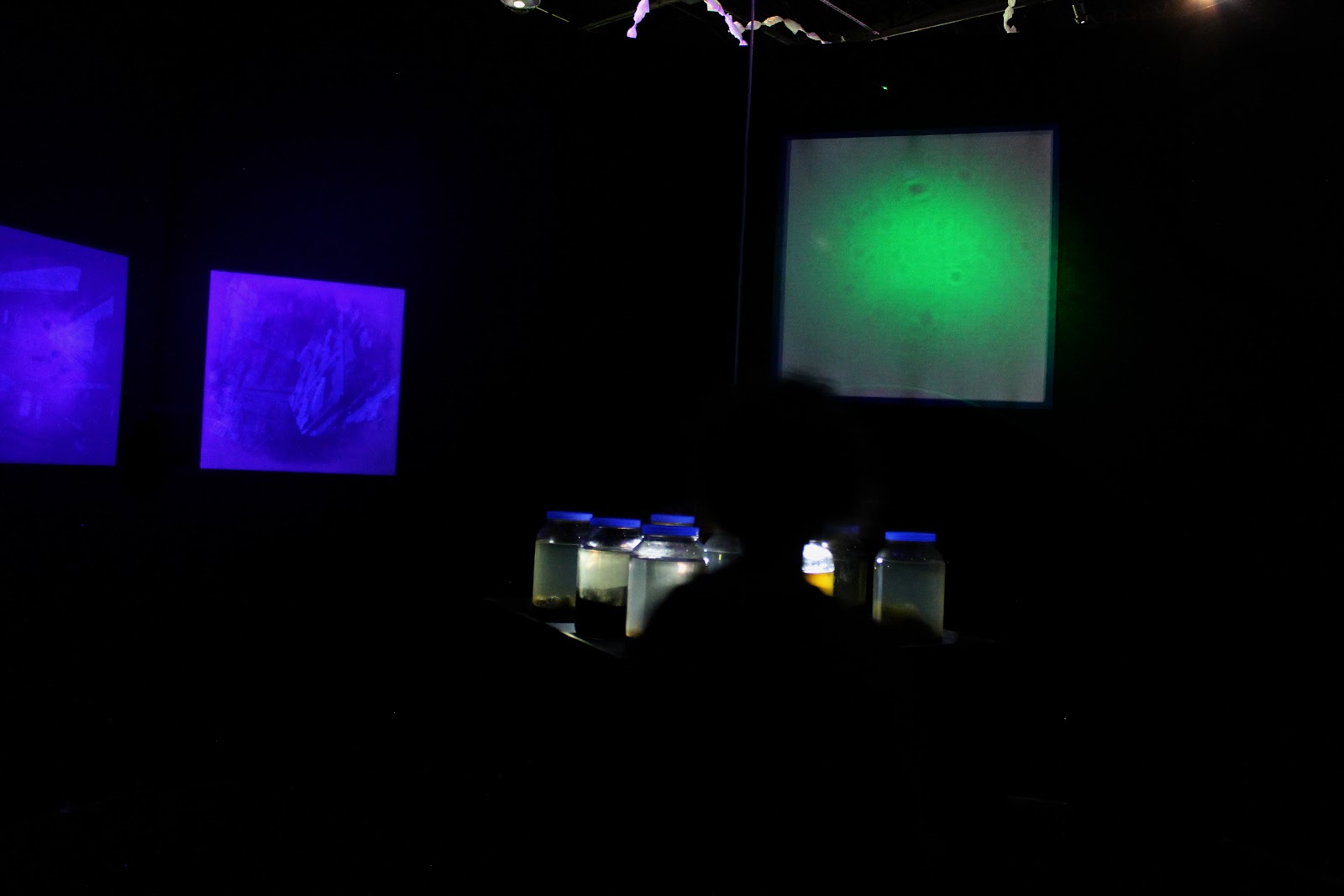
Overview of immersive environment: photoreactive prints, live culture jars, laser microscope

Piece Title: Theater of Collaborative Survival

Date: June to December 2019

Show Title: DEPTH

Venue: Science Gallery Detroit

‣
additional documentation for tenure portfolio [hidden on published website]

At the vanguard of the STEM to STEAM movement, Science Gallery is the world’s first university-linked network dedicated to public engagement with science and art. Our mission is to ignite creativity and discovery where science and art collide. Through our galleries and touring exhibitions we are dedicated to inspiring and transforming curious minds through art and science, and have reached millions of 15-25 year olds worldwide. Our transdisciplinary programmes feature emerging research and ideas from the worlds of art, science, design and technology, presented in connective, participative, and surprising ways.

Curatorial Team:

Rachel Frierson, Director of Programming, Detroit RiverFront Conservancy

Seitu Jones, Visual artist and scientist, McKnight Distinguished Artist and Loeb Fellow in the Harvard Graduate School of Design

Team: Elizabeth Hénaff, Heather Parrish (University of Iowa), Léonard Roussel (ARUP New York) as Scope Collective

Summary: How can we imagine partnerships with unusual organisms for collaborative survival on our changing planet? The microscopic residents of the Gowanus Canal are brought to life through enlarged photoreactive prints, generative sound, and live microscopy visuals. 

Description: This installation is centered on a set of aquariums, each containing living microenvironments sampled from the Gowanus Canal. The environment of the Gowanus Canal in Brooklyn, NY, is emblematic of the many post-industrial Superfund sites across the country. These sites were once important spaces for production and manufacturing industries that have since changed locations, leaving behind a material, economic, and social legacy of toxicity. However, the sediment of the Gowanus Canal contains communities of microorganisms adapted to these seemingly uninhabitable industrial conditions. This unique microbiome encodes bioremediation functions such as the degradation of hydrocarbons and industrial solvents, revealing a vibrant ecosystem in conditions previously considered devoid of life. Its microscopic residents are brought to life through enlarged photoreactive prints, self-generative sound, and live microscopy visuals. Here we explore the multiple facets of the complex relationship we have with contaminated waterways: its impact on the environment, on human health and well-being, the sense of place, the politics of pollution and gentrification and the translation of scale necessary to comprehend microscopic ecologies.

Materials: 20 ft. octagonal room, laser microscope projecting contents of water droplets, jars of Gowanus Canal sludge, grow lights, 8 cyanotype prints of micro-organisms overlaid with uv-reactive images of Gowanus urban environment (36"x36"), lights alternate between white and UVlight, 8-channel granular audio of urban sounds generatively emulating bacterial growth patterns

Installation View
image

Overview of immersive environment: photoreactive prints, live culture jars, laser microscope

installation view | cyanotypes with UV light, human urban scapes. photo: Heather Parrish
installation view | cyanotypes with white lights, water droplet microscopy. Photo: Heather Parrish
installation view. Photo: Heather Parrish
installation view | cyanotypes with UV lights, water droplet microscopy. Photo: Heather Parrish

Detail View

Detail view: Cyanotype prints of microscopy images from Gowanus Canal water. Photo: Elizabeth Henaff
image
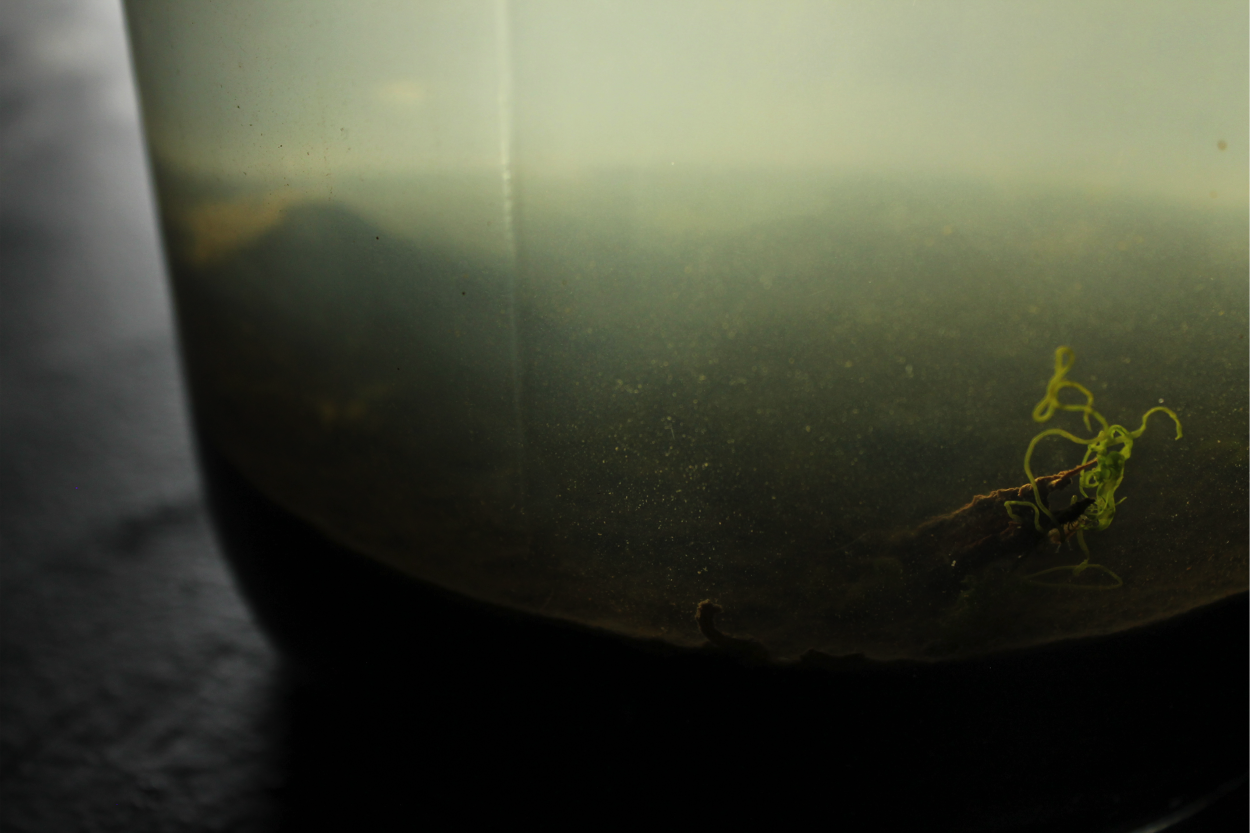
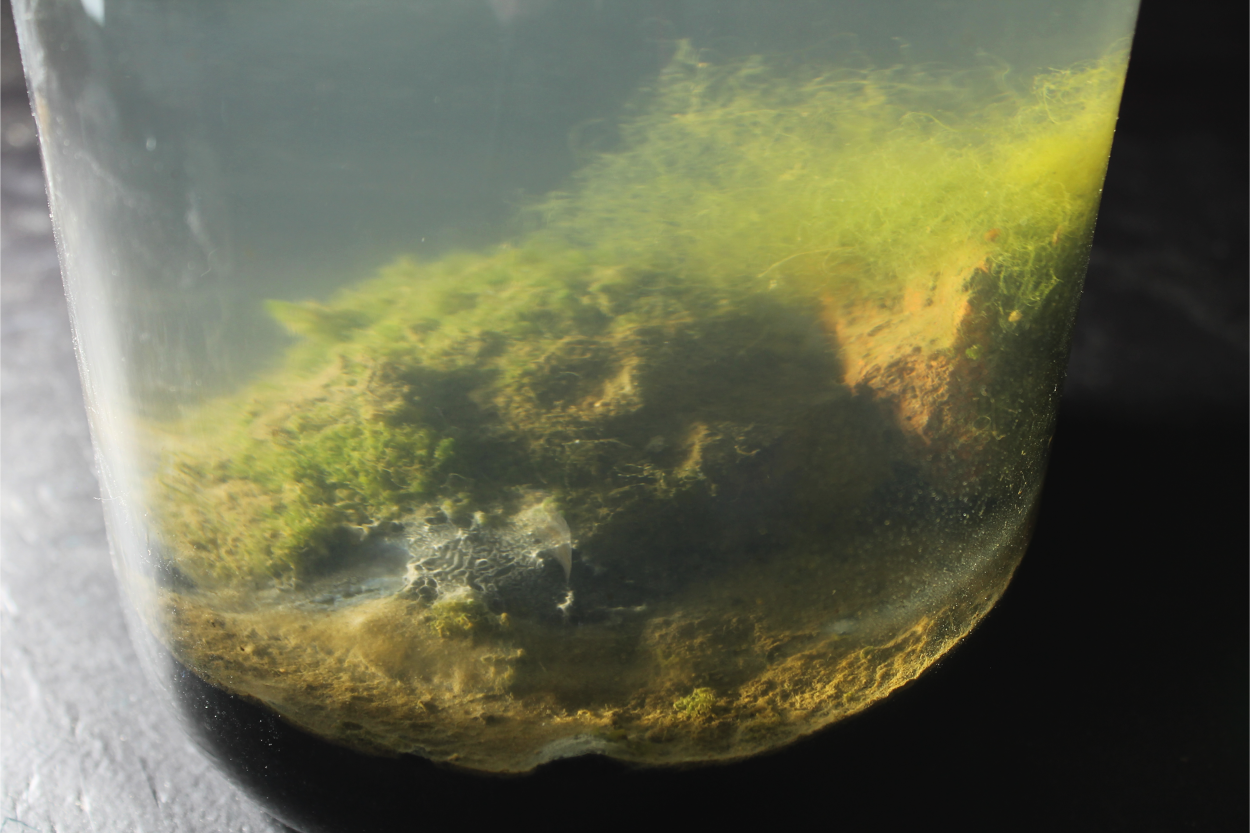
Detail: Cultured sediment extracted from the Gowanus Canal. Photo: Elizabeth Henaff
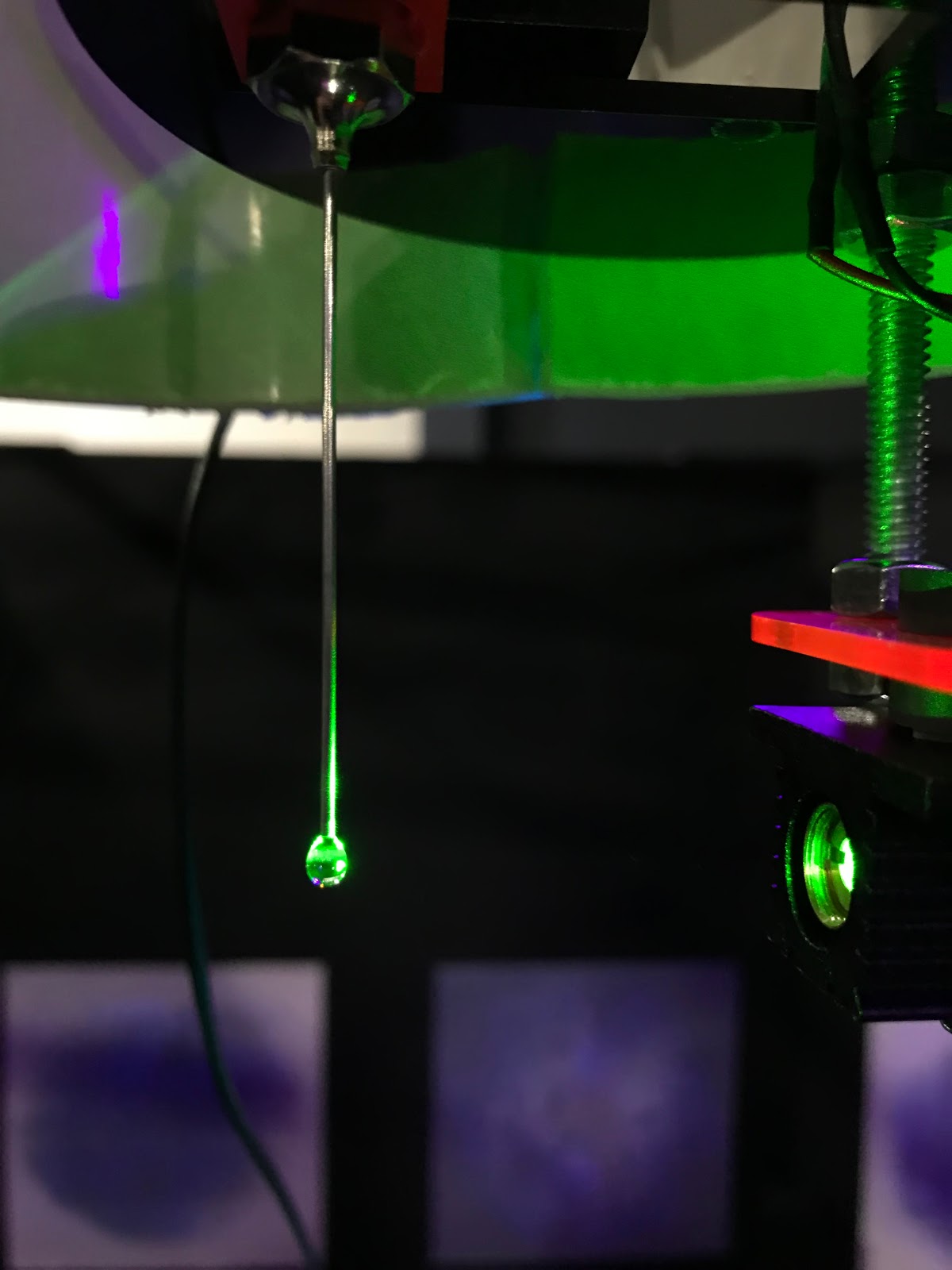
Detail: water drop and laser of laser microscope

Catalog

image
DEPTH.pdf12634.2KB
‣
additional notes and links [hidden on published website]

Project Folder

2018-09-20_DEPTH-funded - Google Drive2018-09-20_DEPTH-funded - Google Drive

documentation

Google Photos 2019 - DEPTH / DetroitGoogle Photos 2019 - DEPTH / Detroit

‣
additional Documentation [hidden on published website]